




Few artists manage to sustain a creative voice that evolves without losing its identity. The Fismits have long built a reputation for thoughtful songwriting, layered production, and music that quietly resists easy categorisation.

With the release of Falling Joy, the project continues to explore themes of emotion, resilience, and reflection while maintaining the sonic curiosity that has defined their journey.

In this conversation with SA Music Zone, Mark Biagio from The Fismits speaks about songwriting, producing, the realities of a long career in music, and the unexpected ideas that continue to shape their creative path.
When you begin writing a song such as “Scars”, do you usually start with a lyrical idea, a musical atmosphere, or a specific emotion you want to capture?
“As I didn’t write the song in its original form, this process was really to capture the emotion and atmosphere that I felt in the original.”
The songs on Falling Joy carry a reflective tone. Looking back at the process of creating the album, was there a particular moment in the studio when you realised the record was starting to take shape as a cohesive body of work?
“I had almost finished “When” post releasing “Halen”. I then retackled “Scars”, and when that started falling into shape my mind then went to thinking about what pieces might accompany these two tracks as a body of work.”
Many artists feel pressure to follow trends to remain visible. Your music often seems to move in its own direction. How do you maintain that independence while still staying connected to audiences?
“I honestly follow my gut or follow the song if you will. It takes a lot of listening and refining and throwing away parts until you get to the things that make sense. Being self-taught, I honestly don’t have the chops to force a song in a direction, or to achieve some audience approval or follow a current trend.”
You have experience not only as an artist but also as a producer. When you are producing your own music, how do you keep enough distance to remain objective about what a song truly needs?
“For me it’s time. Every time I do something, I leave at least 24 hours before listening to it again, usually in the car, in the traffic on the way to work. This way I’m listening with a little expectation, distraction and open to surprise. If it was as good as I thought it was 24 hours ago, it should be as good, or better.”
” Also listening like this means I can’t do anything about it. I’m on a freeway, no guitar or anything. All I can do is listen a few times and make voice notes detailing what I like, or don’t, or any new ideas that are getting sparked.”
For emerging musicians entering the industry today, what do you think is the biggest misunderstanding about how long it takes to build a meaningful music career?
“The words that throw me in that question are ‘meaningful music career’, define that? I think perhaps that is the answer in a way. Meaningful can have a variety of views and further be confused by the word success. I can’t really answer as answering would imply that I have a meaningful musical career.”
“It may be meaningful in terms of, I put my heart and soul into it, it’s quite original, but it’s not my career (sadly so). What I can say is, be patient and don’t get desperate. It always takes longer and desperation leads to bad decisions.”
Technology has changed everything from recording techniques to distribution. From your perspective as a producer, what has been the most positive change brought about by the digital era?
“I think the fact that I can do everything from a very simple home studio is the biggest positive.”
Conversely, are there aspects of the earlier music industry that you feel encouraged deeper creativity or patience in the songwriting process?
“The earlier version had quality gates in the pathway. You needed money to get into a studio, you had limited time in the studio, you needed a music label to like your stuff. So, your only way was to rehearse and gig, build a following and a network, which took time and you build from there.”
“So ‘back then’ we had a lot less rubbish out there. Unfortunately, this also meant that a lot of good stuff never got to be heard, like the original versions of these songs.”
Some songs are carefully crafted while others almost seem to appear unexpectedly. Can you remember a moment where an unplanned idea or mistake ended up becoming a defining part of a song?
“”Independence”, on this EP, was full of unplanned items. The main riff and the pilot’s voice all happened by chance. For the pilot’s voice, I was literally sitting on a plane listening to “Independence” on my headphones (in 24-hour review mode) and I heard the flight attendant through my headphones and I was like, oh wow this works!”
If one of the songs from Falling Joy had to represent the emotional atmosphere of the world right now, which song would you choose and why?
“Tough question. I’ve tried over the past year or so to limit ‘the news’, so I’m not always current with what’s going down. I think “When” will resonate lyrically with someone trying to break free from a situation.”
“”Scars”, on a musical level, has a tenseness, disconnected/connected feeling, but there is a ‘realistic acceptance of the destination’ type tone to it, well to me anyway. And that’s about as deep as I can get.”
South Africa has an incredibly diverse musical landscape. What developments or movements within the local scene currently inspire you the most?
“Inspiration comes from what I’ve seen in collaboration, specifically in the African jazz and world music spaces in the region. I long for that collaboration to weave its way into the harder genres of rock, where we better fuse traditional music elements therein.”
“Off topic, it is something that was well done, strangely so, back in the 1980s. We just forgot about the brilliance of Tribe After Tribe. Also, the rawness of 1990s kwaito and late 1980s Afrikaans alternative has all been lost. Perhaps that’s a ‘con’ to the previous question of the digital era and having too much time to autotune your voice!”
Artists who remain active for many years often develop a deeper relationship with creativity itself. How has your understanding of songwriting changed since the earliest days of The Fismits?
“It probably has. I think I search for more subtlety than brute force, might also be an age factor thing.”
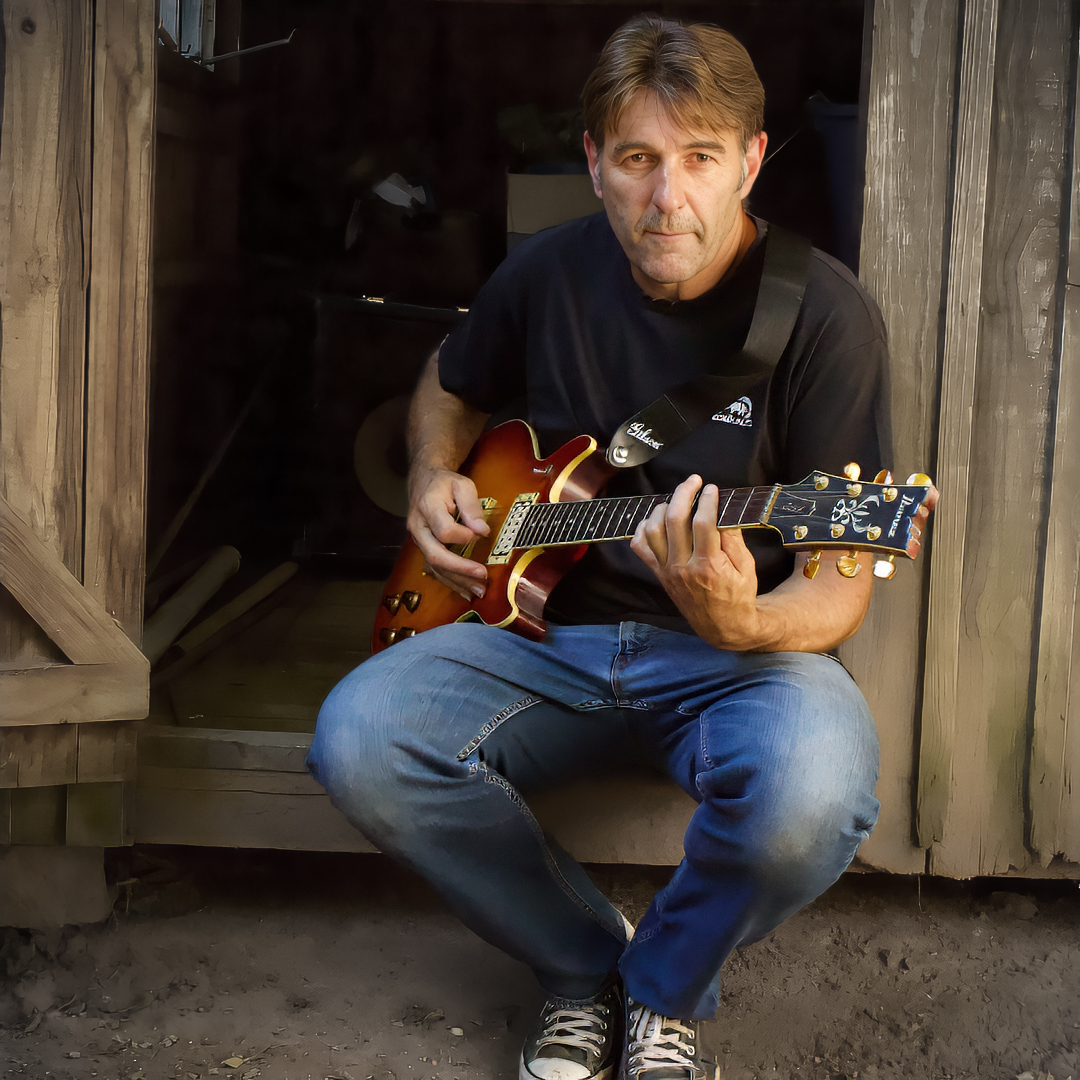
If you could invite a creative collaborator from outside the music world such as a filmmaker, novelist, or visual artist to interpret one of your songs, what kind of collaboration would interest you?
“I think a visual artist could be interesting. I’m not an avid reader and I think filmmakers either smack it out the park or miss the mark. A visual artist, using colour, texture, perspective and dimension, now that sounds interesting. Not sure on the ‘who’ though.”
Do you believe music can express emotions or truths that language alone cannot fully capture?
“Absolutely. I’ve worked on a few movie scores. Words alone in a film, without the music, have almost zero impact. Music can pre-empt, respond to, support or oppose the words.”
What is your feeling regarding the emergence of artificial intelligence used to create music and art?
“I think it has its place but keeping it in place and everyone having a similar definition of ‘place’ is the issue. I think as part of ideation, it can work. However, it seems to go too far with the simplest things. It adds or assumes too much. I’ve struggled to use AI, in that it doesn’t interpret my ‘instruction’ correctly. I’ve tried with lyrics and musical parts. It all got binned!”
Looking ahead, what continues to motivate you to keep writing, recording, and exploring new ideas after so many years in music?
“Music creation is a substantial part of who I am. It is something I can spend hours doing without getting tired. It may not be what I do for a career, but it’s something I fight and want to make time for.”
With Falling Joy, The Fismits continue to demonstrate that longevity in music is not simply about persistence, but about curiosity.
By remaining open to new ideas while staying true to the emotional core of their songwriting, they have built a body of work that speaks across time and genres. As the music industry continues to evolve, one thing remains constant: the enduring power of authentic songs and the creative spirit behind them.
I would like to thank The Fismits for this interview. I wish them all of them best with their future musical endeavors.
You can stream/download “Scars” HERE.
More info about The Fismits
The Fismits is the indie-alternative rock project of South African songwriter and producer Mark Biagio, built on a foundation of memory, lived experience, and emotional honesty.
Originally formed in 2016 as a three-piece band, the project has since evolved into Biagio’s solo creative outlet, reflecting both his long musical history and his instinct for reinvention.
His roots stretch back to the early 1990s in Durban, where he collaborated with Bruce Barrett in The Mind Theatre, laying the groundwork for songs and ideas that would resurface decades later.
The project’s early releases, including the EP Anywhere (2017) and the album Before the Hindsight (2020), established a sound defined by introspective lyricism and melodic depth.
These works explored themes of family, responsibility, love, loss, and resilience, often drawing from Biagio’s own life. By the mid-2020s, The Fismits had transitioned fully into a solo venture, with the 2024 single “Halen” marking a significant moment – both as a continuation of his direct songwriting style and as a tribute to the late Marc Feltham of Live Jimi Presley, connecting past influences with the present.
Watch this space for updates in the Interviews category on SA Music Zone.
Like what you do? Buy us a coffee to enable us to bring your more content like this.
Want to stay in the loop with all things SA Music? Get in the Zone!
Looking for something to do? Check out our Upcoming Events section or the SA Gig Guide.
Want to explore the SA Music Scene? Check out our Artist/Band/Group Profiles section.
Want to discover fresh music? Follow check out editor's playlists on Spotify or YouTube.
